
Upcoming Social Justice Events


Social Justice Library Book Review
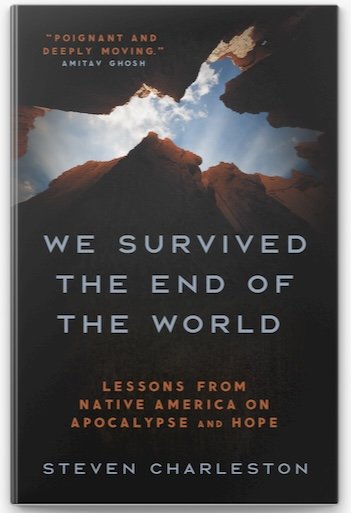
Check out this book, reviewed by Sarah Outterson-Murphy…
We Survived the End of the World: Lessons from Native America on Apocalypse and Hope. Sometimes, the weight of negative news and worry about the future can be overwhelming. Life has been comfortable for many of us, for so long, that we are not sure how to process the sense that everything is falling apart, whether from threats of war, financial uncertainty, technological change, governmental chaos, environmental collapse, or anything else.
I found We Survived the End of the World: Lessons from Native America on Apocalypse and Hope to be a challenging and timely reminder of the importance of prophetic voices in times of crisis. It includes histories and wisdom from five different Native American communities as their leaders worked to give their people hope and a future in the midst of pandemics, invasions, broken treaties, starvation, death marches, cultural devastation, and other forms of genocide.
The author is Steven Charleston, a former Episcopal bishop and a member of the Choctaw Nation. While he is a Christian, he is writing for an audience of people from many faiths, and he conveys respect for traditional Native American beliefs while also drawing connections between it and other world religions.
You will come away from the book with a much deeper sense of how Native people dealt with what Charleston calls "the American Apocalypse," as well as how we can draw from these stories for our present day. Charleston's goal is to awaken each of us to be prophets in our own communities. As he says, "the endurance of Native America comes from sources within every culture. It is the hope of all humanity." If you are in need of some of that hope, try this book.
More on Immigration and Community Organizing in Iowa City
Have you ever wondered how the great civil rights movements of the past took shape?
It wasn’t just through people hearing about other people’s problems…. It was through people having conversations about their own stories, the challenges and struggles of their lives, and coming together in solidarity to turn those stories into demands for change. When Bobby and I lived in Massachusetts, our church was part of the Greater Boston Interfaith Organization. This was a community organizing group that would take one-to-one conversations and share them in a widening circle, through a process of larger and larger meetings. Along the way, research teams looked for winnable solutions to these issues, until finally everyone from all the congregations would get together in a mass rally to make a specific ask, with politicians in attendance to give their answer. This is how GBIO won the Affordable Homes Act in Massachusetts last year, for example.
Now, the Catholic Worker House is starting to build a Listening Team in Iowa City to support people in sharing their stories and building solidarity. This is an outgrowth of the existing immigrant-led group called Escucha Mi Voz, or Hear My Voice, which planned and led the May Day march a few weeks ago. I participated in a conversation with a member of the new Listening Team a couple weeks ago, in which I shared about my own struggles with health insurance and worries over my children’s future with climate change. If you would like to be part of this project and share your own story of struggles that have impacted you personally, please let me know. It’s important to build resilience and connections among different groups of people in our community- Lutheran and Catholic, immigrant and citizen. Most of all, we need to hear from the real experts on social justice: the people directly affected.
That’s what community organizing is all about.
- Sarah Outterson-Murphy